Aerospace Manufacturing Entering a New Era of Precision, Speed, and Process Reliability
A Quiet Transformation Taking Shape on the Shop Floor .Enter a contemporary production facility that is part of an aerospace program, and the environment is not the same as in more traditional manufacturing settings. The same familiar patterns of machine operation, engineers checking tolerances, and operators observing every detail are still there. But beneath this familiar surface, something fundamental is shifting.
The Aerospace Manufacturing reality of today is on the cusp of a new level of accuracy, rapidity, and process consistency. What was once a process that relied so heavily on manual dials and subsequent checks is now informed by data, advanced tooling, and highly precise machining processes. The aim is no longer simply to build a part to spec. The new aim is to achieve repeatable perfection with every cycle, every batch, and every shipment.
This is a revolution that is fundamentally reshaping how manufacturers think about quality, productivity, and competitiveness.
Why Precision Has Become the Core of Aerospace Progress
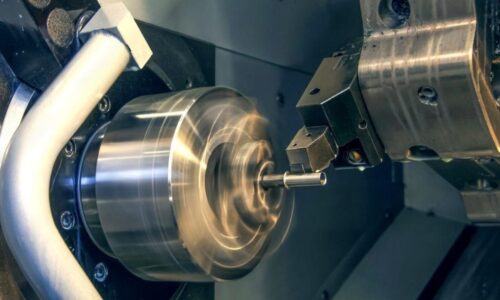
The structures of aircraft, engine components, and flight-critical assemblies require very tight tolerances. Even a minute variation can affect safety, fuel efficiency, or durability. As a result, Precision machining in aerospace is no longer a niche skill but the backbone of the entire production process.
Companies are investing in advanced machining centers, robust tooling systems, and highly controlled environments. These advancements enable them to achieve micron-level accuracy on complex geometries and difficult materials. Aerospace Manufacturing is thus moving from a reactive quality control process to a proactive precision assurance process.
Rather than addressing variations after machining, today’s facilities are working to eliminate variation before it occurs. This approach saves time, reduces scrap, and builds confidence in the supply chain.
The Speed Challenge Without Compromising Safety
Speed has always been a sensitive topic in aerospace production. Unlike mass-market industries, aerospace cannot simply increase cutting speed or reduce inspection steps without careful validation. Every improvement must balance productivity with absolute reliability.
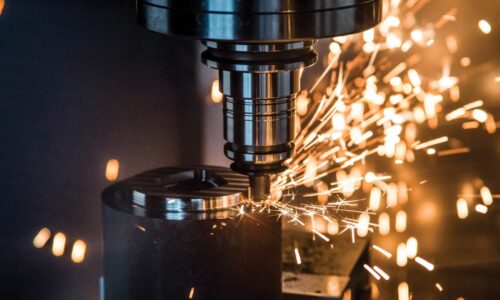
However, new machining strategies and smarter process planning are allowing Aerospace Manufacturing to move faster without increasing risk. High-performance cutting tools, optimized tool paths, and real-time monitoring systems help maintain stability even during aggressive machining cycles.
Through these advancements, Precision machining in aerospace is achieving something that once seemed impossible higher throughput combined with uncompromised safety and accuracy.
Process Reliability as the New Competitive Advantage
In earlier years, aerospace suppliers often competed mainly on capacity or pricing. Today, the most important differentiator is process reliability. Aircraft manufacturers expect consistent quality, predictable delivery timelines, and full traceability from every partner in the supply chain.
This expectation is pushing Aerospace Manufacturing toward deeply standardized and digitally connected workflows. Machines communicate performance data, inspection systems verify dimensions automatically, and production planning aligns closely with engineering intent.
Reliable processes reduce uncertainty, which in turn lowers operational cost and strengthens long-term partnerships. For many organizations, reliability has become more valuable than short-term price advantages.
Materials Driving the Need for Advanced Machining
Modern aerospace components are built from materials designed for extreme environments high temperatures, intense pressure, and continuous mechanical stress. These materials improve aircraft performance but also make machining far more complex.
To handle this challenge, Precision machining in aerospace relies on specialized tooling, controlled cutting parameters, and stable machine dynamics. Every decision from tool geometry to coolant strategy must support dimensional accuracy while preventing thermal distortion or premature wear.
As materials continue to evolve, Aerospace Manufacturing must evolve alongside them, ensuring that machining capability keeps pace with engineering innovation.
The Expanding Role of Trusted Suppliers and Manufacturers
Behind every successful aerospace machining operation is a network of dependable partners. Choosing where to buy tooling or process solutions is no longer a routine purchasing decision. The right supplier and experienced manufacturer directly influence machining stability, surface quality, and long-term productivity.
Forward-thinking companies now look beyond catalog specifications. They evaluate technical expertise, quality consistency, and the ability of a service provider to support real production challenges. When this partnership works effectively, tooling becomes a strategic advantage rather than a simple consumable.
This collaborative approach is becoming essential as Aerospace Manufacturing grows more complex and precision-driven.
Digital Intelligence Reshaping Production Confidence
One of the most significant shifts in recent years is the integration of digital monitoring and data-driven decision-making. Sensors track vibration, temperature, and tool wear in real time. Software platforms analyze this information to predict maintenance needs or detect early signs of variation.
Through these capabilities, Precision machining in aerospace is becoming more transparent and predictable. Engineers gain deeper insight into process behavior, allowing them to refine parameters before problems occur.
This level of visibility strengthens confidence not only within the factory but also across the broader Aerospace Manufacturing ecosystem, where traceability and documentation are critical.
Reducing Rework Through Process Stability
Rework has always been one of the most expensive hidden costs in aerospace production. Additional machining, polishing, or inspection consumes time and resources while delaying delivery schedules.
By focusing on stable machining conditions and accurate tooling performance, Aerospace Manufacturing is steadily reducing the need for corrective work. Consistent cutting behavior, controlled thermal effects, and predictable tool life all contribute to first-pass success.
As Precision machining in aerospace becomes more reliable, manufacturers can shift attention from fixing problems to improving overall efficiency and innovation.
Workforce Skills Evolving with Technology
Technology alone cannot transform aerospace production. Skilled engineers, programmers, and machine operators remain central to success. What is changing is the nature of their expertise.
Modern professionals must understand digital systems, advanced materials, and precision measurement techniques alongside traditional machining knowledge. Training and continuous learning are therefore becoming essential investments within Aerospace Manufacturing organizations.
This human-technology partnership ensures that Precision machining in aerospace continues to advance while maintaining the discipline and responsibility the industry demands.
Sustainability Emerging as a Parallel Priority
In addition to accuracy and rapid processing, sustainability is emerging as a new consideration in aerospace manufacturing processes. Resource-saving processing, longer tool life, and lower energy consumption are becoming new criteria for performance.
Machining stability helps achieve these by reducing waste and avoiding unnecessary rework. In this manner, advances in Precision machining in aerospace help not only improve productivity but also sustainability.
With rising demands for sustainability, Aerospace Manufacturing will see a convergence of excellence in operations and awareness of the environment.
Looking Ahead to the Next Phase of Aerospace Innovation
The future of aerospace manufacturing will probably see even more automation, more intelligent analysis, and greater integration between design and manufacturing. Components could go directly from digital design to optimal machining processes with very little human interaction.
In this rapidly changing environment, companies that focus on precision, speed, and reliability will be best positioned for the future. Aerospace Manufacturing is no longer defined by engineering excellence in the sky but also by manufacturing excellence on the ground.
And at the heart of this excellence is Precision machining in aerospace, which enables the creation of safer aircraft, more efficient performance, and greater global connectivity.
Conclusion: A New Standard for Manufacturing Excellence
A new era is emerging across the aerospace industry, one that is defined by accuracy to the micron, productivity driven by data, and reliability trusted across continents.
Aerospace Manufacturing is pushing forward in ways that were previously unimaginable, driven by innovation in machining, digital intelligence, and supply chain partnerships. But at the same time, Precision machining in aerospace is making sure that all of this progress stays rooted in safety, in stability, and in quality.
For manufacturers who are ready to seize this opportunity, the challenge is clear: from meeting requirements to exceeding them with confidence. And in doing so, they will help shape the future of flight, one that is defined not only by innovation in flight, but by precision in manufacturing.