Production Targets Rising Fast. Is Your PCD Endmill Helping or Holding You Back?
Take a walk through any modern aerospace or automotive production facility today and one thing is immediately apparent: production demands are escalating faster than ever. Machines are running longer hours of operation, parts are becoming more intricate, and customers demand faster delivery without compromising quality.
For many production organizations, it seems like the demands for faster production and better quality are always present. Managers are constantly monitoring production cycle times. Engineers strive to maximize production efficiency. Operators strive to deliver consistent quality from first piece to last piece.
And in many cases, the answer to meeting production demands may lie in a place where it is not always intuitive: the cutting tool.
For many production organizations in the aerospace and automotive industries, it seems like the performance of a PCD endmill may be the unsung hero of determining whether production demands are met or if production is constantly slipping through its fingers. That is why more and more manufacturers in the aerospace and automotive industries are asking themselves: is my current PCD endmill helping my production or silently limiting it?
Rising Production Demands in Aerospace and Automotive Manufacturing
Both aerospace and automotive are dynamic industries. The vehicles are becoming lighter and more fuel-efficient. The aircraft structures are made using advanced materials that are lighter and stronger.
While these developments are good for the performance of the vehicles, they also bring about machining challenges.
Aluminum alloys and composite materials are becoming more popular for machining because they are lighter and more machinable. These machining operations require cutting tools that perform well over thousands of parts without compromising accuracy.
In such cases, the PCD endmill plays a significant role.
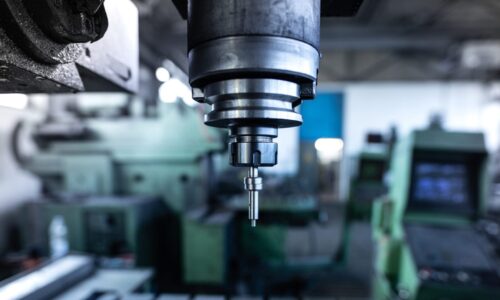
PCD endmill is designed using polycrystalline diamonds, which are among the hardest substances used for cutting tools. This ensures that the cutting edge remains sharp for a longer time even on abrasive materials. In industries that require high volumes and precision, the PCD endmill is the most reliable tool available.
While using the PCD endmill is good, there are other factors that need to be taken into account.
The Real Impact of Tooling on Productivity
As production targets are increased, every second counts in machining.
If cutting tools are changing more often than expected, it means machines are being brought to a standstill. If there is an issue with the quality of the finished part, it means it is being redone. If there is vibration, it means cutting speeds are being reduced.
All these problems impact productivity.
Having a well-designed PCD endmill tool solves these problems since it has consistent cutting ability. The tool has diamond cutting edges, which are more resistant to wear and can be run for longer machining cycles without compromising accuracy.
Most aerospace and automotive companies opt to Buy high-quality PCD endmill tools since they reduce machine downtime and provide more stability during machining.
Although there is a high Price associated with using this tool compared to conventional tools, there are long-term benefits in terms of cost per part and efficiency.
How PCD Inserts Support High-Volume Production
In addition to milling operations, turning operations in automotive and aerospace manufacturing frequently rely on PCD inserts.
These inserts are designed to deliver similar advantages to diamond milling tools. PCD inserts offer excellent wear resistance and are particularly effective when machining aluminum alloys or non-ferrous materials.
Many production lines combine PCD inserts with a PCD endmill to achieve maximum efficiency. While the PCD endmill handles complex milling operations, PCD inserts are often used in turning processes where high-speed machining is required.
Because PCD inserts maintain sharp cutting edges for long periods, they reduce tool replacement frequency and support stable production.
A knowledgeable Supplier often recommends integrating PCD inserts into machining processes to complement the performance of a PCD endmill.
Where PCBN Tools Fit Into the Process
While diamond tools perform exceptionally well with non-ferrous materials, some aerospace and automotive components require machining of hardened steel or high-temperature alloys.
This is where PCBN tools come into the picture.
PCBN tools are made from cubic boron nitride and are specifically designed for machining hard metals. Their thermal stability allows them to maintain performance even at high cutting temperatures.
In many production facilities, PCBN tools work alongside the PCD endmill. Each tool type handles different materials within the same production environment.
For example, PCBN tools may be used for hardened steel components in automotive transmissions, while a PCD endmill machines lightweight aluminum engine parts.
An experienced Manufacturer or Service provider understands how to balance these tools to achieve the best machining results.
Why Custom Tooling Is Becoming More Important
Modern components are becoming increasingly complex. Standard tools do not always provide the best solution for every machining challenge.
In such cases, manufacturers may require a Special PCD tool designed specifically for their application.
A Special PCD tool can combine multiple cutting functions or feature unique geometries tailored to the component design. This reduces machining time and improves accuracy.
For example, a Special PCD tool might perform roughing and finishing operations in a single pass. This reduces tool changes and improves cycle time.
Although the initial Price of a Special PCD tool may be higher, the productivity benefits can be significant.
Companies that work closely with a reliable Supplier or Service provider often discover that custom tools unlock new levels of efficiency.
The Role of a Knowledgeable Supplier
The choice of the right Supplier is of utmost importance in the selection of high-performance cutting tools.
A good Supplier does not just supply products; he or she studies the machining process, the materials, and finally recommends the best tool for the job.
For example, an experienced Service provider could recommend changing the geometry of the PCD end mill to enhance chip evacuation or diminish vibrations. They could also recommend the use of PCD, PCBN, or even designing a Special PCD tool for the task.
An experienced Manufacturer ensures precision and reliability in the cutting tools designed.
Businesses that solely target the Lowest Price neglect the value of technical expertise and application support.
Tool Life and Production Stability
The biggest advantage of PCD endmills is that it offers longer tool life.
The reason for longer tool life is that the edges of PCD endmills do not wear out easily. This is because PCD is more resistant to wear compared to other materials.
This means that PCD endmills will offer stable performance over longer periods of production.
This is important for manufacturers who Buy PCD endmills because it means that they will not have to worry about production stability.
This is particularly important when production targets keep rising.
Adapting to the Future of Manufacturing
The aerospace and automotive industries will continue to change. New materials, more stringent efficiency demands, and higher production rates will define future manufacturing.
To meet the needs of changing industries, machining techniques must change too.
Cutting tools like PCD endmill, PCD inserts, and PCBN tools give manufacturers the confidence to work with new materials. Often, designing a Special PCD tool for particular parts can offer even more benefits.
Working with a Manufacturer and Service provider who is experienced in helping companies meet these needs is key to success.
A Question Every Production Team Should Ask
In such a scenario, where the targets for production are increasing every day, every step of the machining process needs to be working at its optimum.
From the machines themselves to the cutting action and the cutting tool used, every factor is responsible for the efficiency of the process.
Among all these factors, the PCD endmill is often at the core of the machining process.
If the tool is used to its optimum potential, it can help increase the speed and efficiency of the process, along with providing better finishes and longer tool life.
However, if the tool is not used to its optimum potential, it can silently bring the whole process to a halt.
This is precisely the reason why many forward-thinking manufacturers are taking the time to review their tooling strategy.
They are looking to see whether their PCD endmill, PCD inserts, PCBN tools, and custom tooling such as the Special PCD tool are working for them.
In the aerospace and automotive industries, the margin between achieving targets and failing to achieve targets may just be dependent on whether the PCD endmill is working for the company or not.